Skip to content
IJCLAb home page
bandeau-ijclab-ondesgravita
Astroparticles, Astrophysics et Cosmology pole (A2C)
bandeau-ijclab-cuve-nuit
Astroparticles, Astrophysics et Cosmology pole (A2C)
bandeau-ijclab-cuves-pampa
Astroparticles, Astrophysics et Cosmology pole (A2C)
bandeau-ijclab-fond-cosmique
Astroparticles, Astrophysics et Cosmology pole (A2C)
bandeau-ijclab-A2C-ASSD
Astroparticles, Astrophysics et Cosmology pole (A2C)
PlayPause
previous arrow
next arrow
Shadow
  • Français
  • Home
  • News
  • Science & experiments
    • Astrophysics & cosmochemistry (AC)
    • Astroparticles, solid-state detectors (ASSD)
      • Cross & CUPID
      • Ricochet
    • Cosmic microwave background (CMB)
      • LiteBIRD
      • Simons Observatory
    • Dark energy (LSST)
      • Vera C. Rubin observatory
      • StarDICE
    • Direct Dark Matter (DDM)
      • DAMIC-M
    • Gravitational waves (OG)
      • CALVA
      • Einstein Telescope
      • GRANDMA
      • SVOM
      • Virgo
    • High-energy astroparticles (APHE)
      • Cherenkov Telescope Array (CTA)
      • Pierre Auger observatory
  • Members
  • Working at A2C
CNRS nucléaire et particules
logo PS bandeau
univparis-smal-barre
  • Home
  • News
  • Science & experiments
    • Astrophysics & cosmochemistry (AC)
    • Astroparticles, solid-state detectors (ASSD)
      • Cross & CUPID
      • Ricochet
    • Cosmic microwave background (CMB)
      • LiteBIRD
      • Simons Observatory
    • Dark energy (LSST)
      • Vera C. Rubin observatory
      • StarDICE
    • Direct Dark Matter (DDM)
      • DAMIC-M
    • Gravitational waves (OG)
      • CALVA
      • Einstein Telescope
      • GRANDMA
      • SVOM
      • Virgo
    • High-energy astroparticles (APHE)
      • Cherenkov Telescope Array (CTA)
      • Pierre Auger observatory
  • Members
  • Working at A2C

Blog

  1. Home>
  2. A2C>
  3. High-energy astroparticles>
  4. Why the night is dark? A 200 years old question.

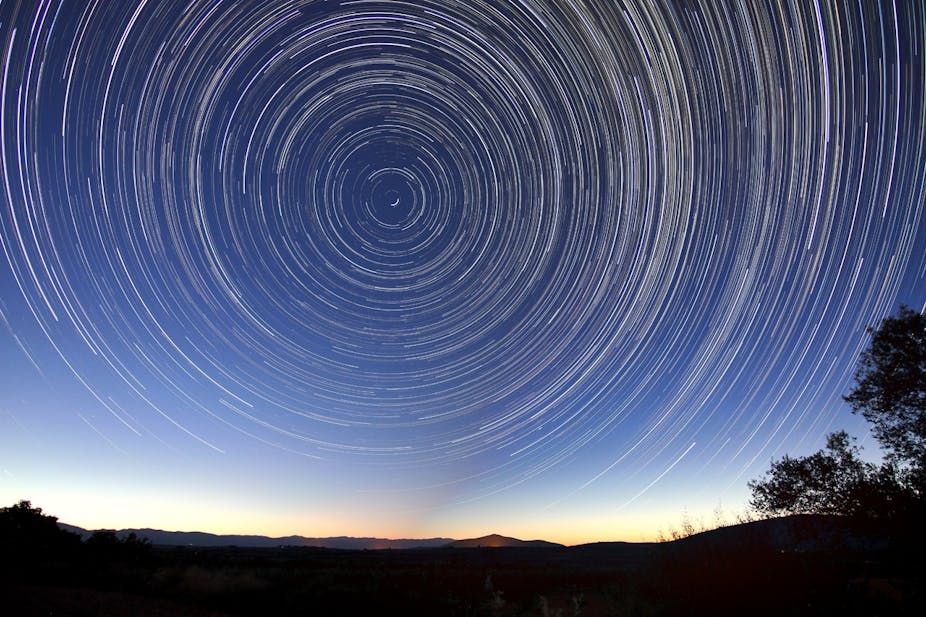
Why the night is dark? A 200 years old question.

  • Post author:robinet
  • Post published:5 May 2023
  • Post category:A2C / High-energy astroparticles / Press and media

Publised in The Conversation, “Why the night is dark? A 200 years old question” (French only). Jonathan Biteau (Pôle A2C, équipe APHE) et al.

You Might Also Like

Recent advances toward mesoscopic quantum optomechanics

24 April 2023

Constraints on cosmic strings using data from the third Advanced LIGO-Virgo observing run

8 June 2021

Omicron: a tool to characterize transient noise in gravitational-wave detectors

8 July 2020

Recent Posts

  • Open CNRS position in Dark-Energy Cosmology involving IJCLab/LSST.
  • Combining CMB datasets with consistent foreground modelling
  • Paper: All-sky search for long-duration gravitational-wave transients in the first part of the fourth LIGO-Virgo-KAGRA Observing run
  • GWTC-4.0: the new catalog from LIGO-Virgo-KAGRA
  • Paper: Resonant behavior and stability of a linear three-mirror cavity

Categories

A2C (75) Astroparticles, solid state detectors (1) Astrophysics & cosmochemistry (3) Ceremony (4) Cosmic microwave background (CMB) (4) Dark energy (LSST) (2) Data taking (4) General (7) Gravitational waves (53) High-energy astroparticles (12) Not sorted (1) Press and media (4) Publication (56) Results (1)

1 clic >

Scientific poles
Nuclear physics
High energy physics
Astroparticules, astrophysics & cosmology
Energy & environment
Health
Theory
Accelerator physics
Engineering pole
Electronics
IT & computing
Detectors & instrumentation
Mechanical engineering
Plateforms
ALTO
MOSAIC
LASERIX
SUPRATECH
Other links
Reach us
Directory

Follow us

IJCLab
Twitter
CNRS
  • Opens in a new tab
  • Opens in a new tab
  • Opens in a new tab
  • Opens in a new tab
My Tweets

Share

Laboratoire de Physique des 2 infinis Irène Joliot-Curie – IJCLab
Bât. 100, 15 rue Georges Clémenceau, 91405 Orsay cedex

UMR9012 – CNRS / Université Paris-Saclay / Université de Paris – Copyright 2026

Building 100A LAT/LONG: 48.698401,2.176352

Credit / Legal notice / GDPR

Copyright 2026 - IJCLab 2021